The main performance criteria for tyre comparison
Traction or grip
Longevity
Energy efficiency
Handling
Comfort and Noise
Robustness
Long lasting performance
How to compare tyres within the same tyre line?
Each of our tyre lines is made in a selection of sizes to fit appropriate vehicles.
Sometimes a tyre line will have several versions of the same tyre size but with different technical specifications such as :
Speed ratings (ex: S, T, H, V, W, Y, etc.),
Load index (ex : 91, 94, XL, etc.),
OE markings (Original Equipment).
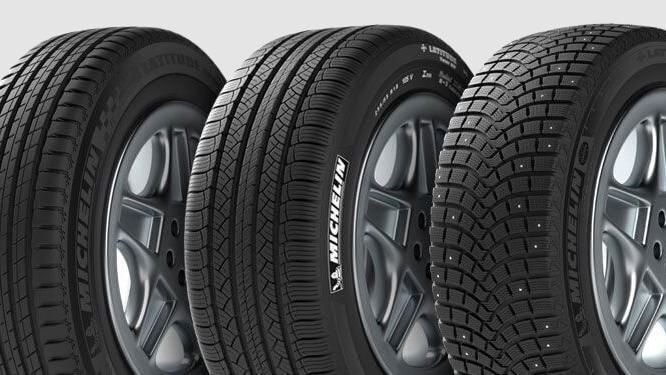
These technical specifications are important details that can determine whether or not that version is compatible with your vehicle and the way you drive.
If several versions are compatible with your vehicle, we recommend that you choose the version with the same specifications as your original equipment tyres, including the correct OE marking.
The OE marking concerns tyres developed in cooperation with car manufacturers that meet more specific requirements, proper to each car brand. For example, the "MO" marking means that the tyre is approved by Mercedes for its vehicles.
However, the OE marking is not a requirement as long as the size, speed, and load indexes are respected.
You can also safely select a version with higher speed rating or load index; however, higher speed or load capability can negatively impact tread life and ride comfort.
Independent tests to help you compare tyres
Independent tyre testers such as specialized magazines or professional organisations can help you for your tyre comparison.
Each year, these independent testers use very strict criteria to assess the performance of tyres by testing them on different surfaces. They evaluate various aspects such as braking, handling, rolling resistance, noise, etc…

Compare tyres with the european labelling
European labelling is designed to help you compare different tyre models (from different brands or within the same brand) on objective criteria.
Labelling can therefore be an aid to decision-making. However, you should be aware that it is limited to a few criteria and that it only measures tyres when they are new, which does not tell you everything about a tyre's performance.
Compare tyres with tyre comparison sites
Using tyre comparison sites can be helpful, but it is important to remember that their comparisons are generally based on new tyres which means that they do not put the tested tyres into perspective beyond a certain level of wear (once they have covered a few thousand miles).
Yet some tyre performances become less effective with wear, particularly on wet roads and especially when braking. Therefore, it is also important, when comparing tyres, to assess the performance of tyres once they start to wear.
Choosing tyres with performance made to last
Maintaining the performance of the tyre until the very last mile is precisely what Michelin demands of its tyre ranges.
In the development and production of our tyres, we strive to obtain the best performance without compromise when they are new, and that this performance remains at an excellent level until the very last mile, once the maximum wear level has been reached.
Tyre Comparison & Selection FAQ
Evaluating new tyres can be confusing with all the different ratings, labels, and performance claims out there. Explore these frequently asked questions to learn how to effectively compare tyre specifications, decode technical markings, and choose the perfect set for your driving needs and budget.
FAQ
Most standard tyre comparison sites and European labels only evaluate tyres when they are brand new. However, tyre performance—especially wet braking and road grip—can deteriorate significantly as the tread wears down over time. When comparing options, look for brands that prioritize "performance made to last," ensuring the tyre remains safe and effective from the first kilometre to the very last mile before replacement.
Tyres have a massive impact on efficiency, accounting for roughly 1 out of every 5 tanks of fuel (or about 20% of an electric vehicle's battery range) purely due to rolling resistance. Selecting energy-efficient tyres built with advanced low-rolling-resistance materials reduces this drag, directly saving you money at the pump or extending your driving range per charge.
OE markings indicate that a tyre was developed in close collaboration with a specific car manufacturer to meet their strict vehicle dynamics and performance requirements (for example, "MO" denotes approval for Mercedes-Benz vehicles). While these tyres aren't strictly mandatory as long as the size, load, and speed ratings match your vehicle specs, sticking to the factory OE marking ensures the exact driving feel intended by the manufacturer.
Yes, it is entirely safe to select a tyre version with a higher speed rating or load capacity than your vehicle's factory standards. However, you should factor in performance trade-offs: tyres engineered for higher thresholds feature stiffer internal construction, which can slightly reduce ride comfort and shorten overall tread life compared to standard ratings.
Tyre design requires balancing conflicting performance traits. High-performance sports tyres prioritize maximum traction, precise cornering control, and high-speed stability, which requires stickier, softer rubber compounds. Because the engineering focus is strictly locked onto driving pleasure and safety at high speeds, these tyres naturally wear down faster than standard passenger tyres optimized for daily commuting longevity.
Related articles
-

How can tyres improve mileage and fuel economy?
Knowing about the tyre-fuel efficiency relationship can help you travel further on a full tank, which is not only good news for your wallet, but also for the environment. Here, we look at how to improve fuel economy, with a focus on the tyre and fuel efficiency codes: how to understand the label, and what the fuel efficiency tyre chart really means.Learn more -

Can you mix different tyres?
Can you put different tyres on the front and rear? Can you mix different tyre brands? Can you have different tread depths on the same axle? It's not easy to find your way around, but MICHELIN helps you understand what is possible and what is not.Learn more -
How to Choose Commercial Light Truck Tyres
Selecting the right tyres for your commercial light truck is crucial for ensuring safety, efficiency, and compliance with regulations. This guide will walk you through the key factors to consider when making this important decision.Learn more