While monsoon driving is necessary during Malaysia’s rainy season, it can pose several safety risks to both you and your vehicle. To ensure that your driving in rain is trouble-free, this article offers practical advice on how to best prepare for monsoon driving, car care tips for rainy seasons, heavy rain safety precautions and more.
Monsoon driving preparation
Strong winds and heavy downpours are common during Malaysia’s Northeast monsoons. This means that if you live in the east coast of the Malaysia Peninsula, Borneo, or are heading towards the area, there is a high chance of you encountering a monsoon.
To best prepare for monsoons and monsoon driving, we recommend that you study your driving routes, check the weather forecast, and complete an inspection of your vehicle to ensure that all of your car parts and systems are in their best condition.
Inspect your tyres
Your tyres are one of the most crucial components in your vehicle when it comes to driving in rain. Driving on wet roads already comes with increased risks for aquaplaning and roadside accidents from potential loss of vehicle handling, steering control, and reduced traction.
On the streets of Malaysia where flooding often occurs during the months of heavy monsoon rains, quality rain tyres such as Michelin Primacy 5 and Michelin Energy XM2+ are highly recommended for superior grip and enhanced handling.
Having good quality tyres alone does not guarantee maximum safety when driving in rain. Your tyres should be properly inflated and have the appropriate tread depth to be able to maintain consistent contact with the road surface. Visit your nearest Michelin dealerships for tyre inspection, replacement, or find the best rain tyres for you.


Dealer Locator
Search among our dealers to find where your tire is available
Check your headlights, brake lights, and turn signals
To increase your visibility during monsoon driving, ensure your headlights and brake lights ensure optimal illumination, and turn signals for effective communication with other drivers and pedestrians on the roads.
You can inspect the quality of your headlights and brake lights by turning them on when you are parked in a safe space. For turn signals, it is equally important to test how fast your turn signals flash.
Test your windshield wipers
Your windshield wipers also play a vital role in maintaining your visibility level when driving in adverse weather conditions. You can look for visual damages like cracks, chips, or scratches on your windshield wipers and their blades.
A thorough check of your windshield wipers can help you spot any loose seals, discolouration, water leakages, or molding where your windshield wipers meet the edge of your vehicle. Sometimes, you may even sense musty odours or hear a squeaky noise when your windshield wipers are in action. If this happens, we recommend that you replace your windshield wipers with new ones.
When is the best time to start preparing for the monsoon?
Many Malaysian locals start preparing for the monsoon season as early as April and October where signs of the monsoon become more visible to minimise the effects on their daily activities.
Tips for driving in rain at night
Driving in the rain at night is often advised against for safety reasons, especially during heavy monsoon seasons. However, if you must drive in heavy rain, we recommend that you follow these tips closely.
Turn on your headlights
Turn on your headlights to improve visibility and make your vehicle more visible to others.
Reduce your driving speed
Reduce or drive at a manageable speed to allow for safe monsoon driving without skidding.
Brake cautiously
Avoid sudden brakes and sharp turns on wet roads to prevent skidding. Gentle braking is also an effective way to alert the drivers behind you that you are slowing down. Having a reliable navigation system can help anticipate turns.
Stay alert
Monsoon driving demands your full attention. Avoid distractions such as mobile phones, eating, or adjusting the radio/navigation. Focus on the road ahead and your surroundings. Keep both hands on the steering wheel for optimal control of the vehicle in wet conditions and strong winds
Don’t Use Cruise Control
Experts also advise against using the cruise control function in wet road conditions, as the automatic acceleration can cause you to lose control of your vehicle when your vehicle hydroplanes.
Avoid flooded areas and puddles
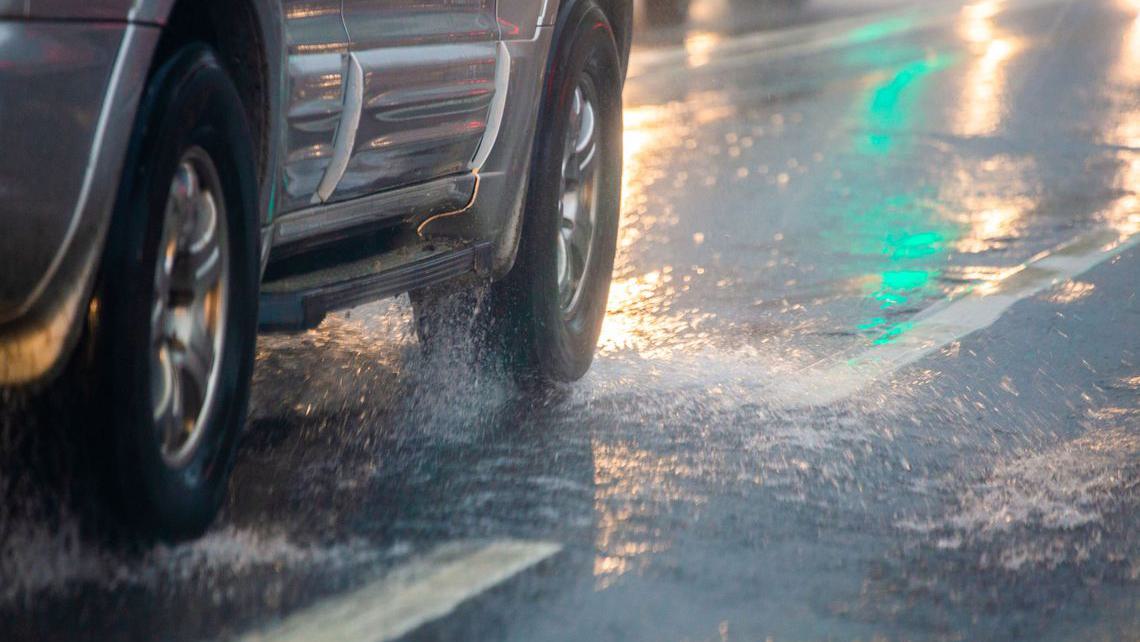
When you see a puddle, avoid driving through it. If you can’t, reduce the speed to avoid splashing water and impairing others’ visibility. Beware of aquaplaning. If you aquaplane, don’t panic. Release both the brake and accelerator pedal and try to steer your vehicle back on the lane.
Keep a constant speed in the flood
If you cannot avoid driving in the flood, keep a constant speed and don’t release the accelerator to prevent water getting into the exhaust pipe.
Maintain a safe following distance
Rain significantly reduces the grip between your tyres and the road surface, which means it takes longer to bring your vehicle to a complete stop. It’s recommended to increase the following distance from the standard 3 seconds to at least 4 seconds in the rain. This will help you avoid colliding with the vehicle in front of you if it suddenly brakes.
Never turn on hazard lights
Turning on hazard lights can cause confusion for drivers behind you and increase your chances of getting into accidents.
Car care tips for rainy seasons
Proactive car maintenance is crucial for safety and longevity of your car. Here are several maintenance recommendations that will keep your vehicle in prime condition throughout the monsoon season.

Check your battery
During the rainy season, the electric system in your car works harder than usual. The frequent use of windshield wipers and headlights put a lot of strain on your battery. This increased load can potentially lead to battery failure, leaving you stranded in the storm.
We recommend that you check your battery terminals for corrosion as they can pose potential electrical problems to your car. While you can clean your battery with a wire brush and a mixture of water and baking soda, having your car battery health checked at a local workshop is a good practice to keep your battery voltage at the correct level.
Ensure proper sealing of your doors and windows
The rubber seals prevent water leaks around your car doors, windows, and boot. Constantly cleaning your car seals can prevent water from entering the inside of your car which can potentially lead to foggy windows and the formation of mold inside your car.
With a damped cloth, remove dirt and grimes from your rubber seals before applying a seal conditioner or silicone spray to extend their lifespan. You can also check for the hardening, cracking, and tearing of rubber seals by moving your fingers along the seams to feel for any texture inconsistencies.

Wash your car regularly
When you bring your car out during the monsoon season, it is essential to wash it on a regular basis. Driving during rain can bring about mud and grimes that trap moisture against the surface of your car and encourage rust and corrosion. Constantly washing your car prevents the build-up of corrosive materials.
It is equally important to make light cleaning a regular part of your car wash routine. This simple car care practice can remove haze from your headlights, tail lights, brakelights, and turning lights and ensure that they stay bright for maximum visibility on the road.
Stay safe on the roads this monsoon season
Find the best rain tyres for your car in our tyre catalog.
Related articles
-

Driving safely on mountain roads
Driving on mountain roads requires appropriate precautions and behaviour to stay safe, especially in difficult weather conditions such as wet, snowy or icy roads. Read on to find out what our experts have to say about driving safely on mountain roads. Summary : How to be well prepared before the journey Safe driving tipsLearn more -
What does aquaplaning mean and how to avoid it?
Aquaplaning (also called hydroplaning) may seem a little scary, but it is only a very rare cause of accidents. In fact, even when you are driving in the rain, road conditions involving a risk of total aquaplaning only represent 0.01% of cases.
What does aquaplaning mean? In which cases is it a real risk? How to prevent it and what should you do if it occurs? You will have an answer to all these questions in this article.Learn more -

Driving Forward: How Micheiln's Tyre Innovation Keeps You Safer on Malaysian Roads
From sudden downpours on the Federal Highway to the winding hills of Cameron Highlands, Malaysian drivers face diverse driving conditions. Your tyres must handle torrential rain and intense tropical heat. At Michelin, our tyre innovation isn't just about the future; it's about solving these real-world, everyday challenges.Learn more